
Emotionally Raised by the Internet: How TikTok Is Teaching an Entire Generation to Feel
It’s wild to think about, but for an entire generation, the internet has become the place where people first learn about their emotions. Before therapy, before real conversations, before meaningful relationships — there’s TikTok, Reels, and For You Pages full of creators who break down trauma, attachment styles, communication patterns, red flags, and healing.
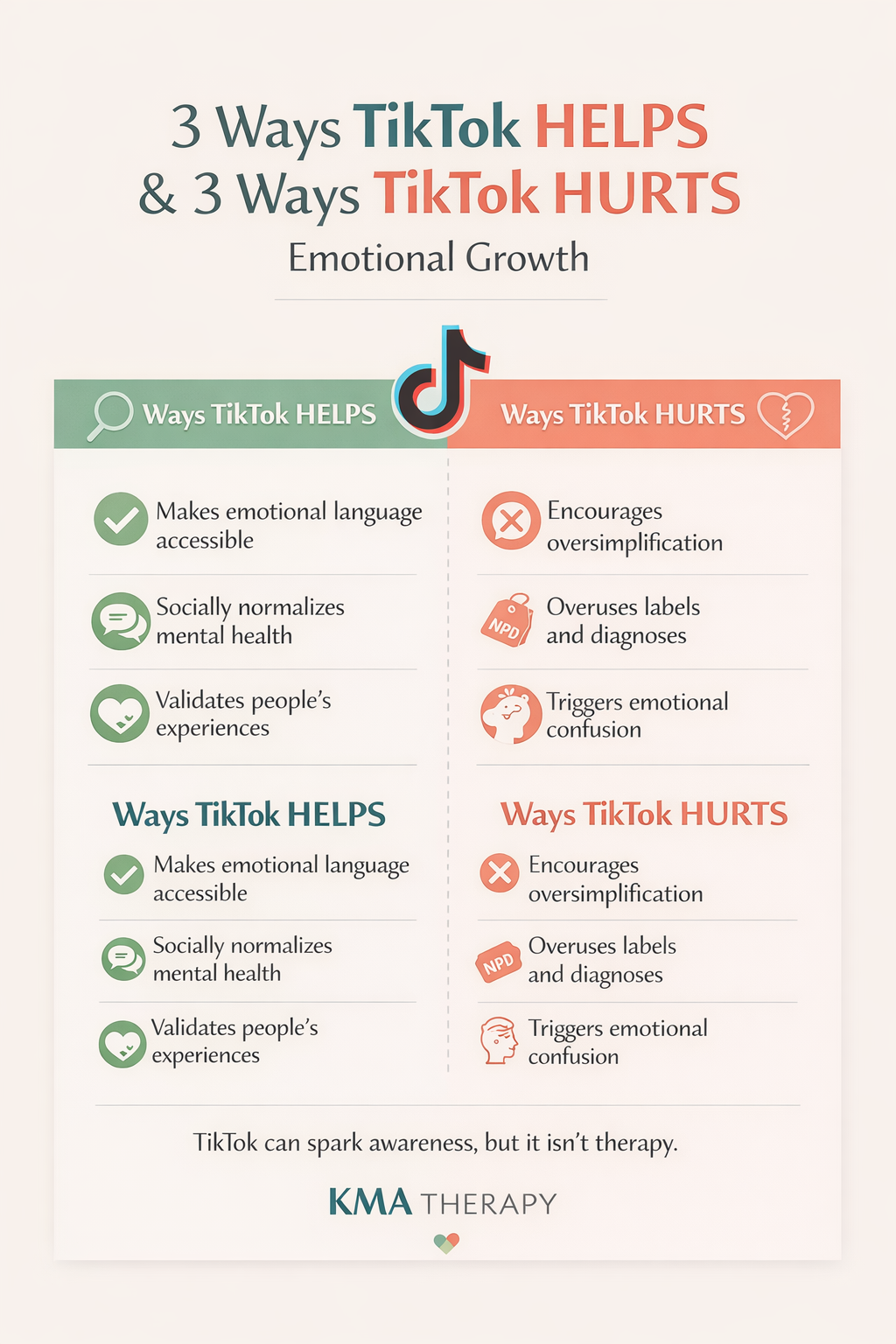
For millions of people, TikTok is the first space where emotional language feels accessible.
And in many ways, that’s beautiful.
People who were never allowed to feel suddenly have vocabulary.
People who were never validated suddenly have community.
People who never understood their patterns suddenly feel seen.
But being emotionally raised by the internet also comes with complications — because TikTok teaches in 30-second fragments, without nuance, without context, and without the safety of real therapeutic support.
We’re learning to feel in algorithms, not relationships. And that shapes us more than we realize.
Why TikTok Became an Emotional Classroom
Online therapy content exploded because people were desperate for something they weren’t getting elsewhere: clarity, validation, guidance, and words for experiences that felt impossible to articulate.
Most people didn’t grow up with strong emotional education.
They learned:
- to bottle their feelings
- to be strong
- to avoid conflict
- to self-silence
- to normalize dysfunction
- to confuse chaos with love
TikTok disrupted that by handing people language — sometimes accurate, sometimes oversimplified — and suddenly emotions became something you could learn, diagnose, compare, and “relate to.”
For many, TikTok wasn’t just content.
It was the first time they heard someone say:
“You’re not dramatic. This is a real pattern.”
“You’re not needy. You’re triggered.”
“You’re not broken. You’re human.”
There’s real healing in that.
But when emotional learning happens online, something gets lost:
context, nuance, pacing, and support.
The Upside: What TikTok Has Given Us
Let’s be honest — therapy content on social media has improved lives.
It has made:
- emotional language accessible
- mental health less stigmatized
- attachment styles understandable
- boundaries socially acceptable
- trauma-informed conversations mainstream
- “I need space” and “I need clarity” normal phrases
- emotional literacy something you can learn at any age
Millions of people found language for experiences they carried in silence for years.
That’s not small — that’s transformational.
For many, TikTok creators became the first adults who ever explained feelings with compassion.
But every strength has a shadow.
.png)
The Downside: When Oversimplified Content Becomes Emotional Truth
TikTok isn’t therapy — but when you’re emotionally hungry, it can feel like it is.
The problems begin when:
- every feeling becomes a “sign”
- every disagreement becomes a “red flag”
- every relationship becomes “toxic”
- every quirk becomes a “trauma response”
- every attachment pattern becomes destiny
- every mistake becomes pathology
People start diagnosing themselves — and each other — through fragments of information.
It becomes easy to believe:
“I have anxious attachment.”
“He’s avoidant.”
“She’s a narcissist.”
“I’m triggered.”
“This is a boundary.”
“I’m emotionally unavailable.”
Sometimes it’s true.
Sometimes it’s projection.
Sometimes it’s oversimplification.
And sometimes it’s content creators speaking in absolutes for virality, not accuracy.
Without guidance, emotional learning becomes emotional confusion.
How Being Raised Emotionally Online Changes Us
People who primarily learn emotional skills from the internet often struggle with:
1. Over-identifying with labels
A term becomes your identity instead of a tool.
2. Misinterpreting normal conflict as dysfunction
Healthy discomfort feels like danger.
3. Becoming hyper-aware of emotional patterns
Every interaction becomes analysis.
4. Difficulty tolerating nuance
TikTok teaches binary thinking: safe/unsafe, red flag/green flag.
5. Confusing insight for healing
Knowing the pattern ≠ changing the pattern.
6. Having unrealistic expectations of communication
Real connection is messy, not scripted.
7. Feeling emotionally “educated” but still stuck
Because information without integration leads to stagnation.
You can understand everything and still feel overwhelmed — especially when your education came from 30-second bursts.
.png)
So… Is TikTok Helping or Hurting Us?
The truth is: both.
It gives you the language — but not the practice.
It gives you insight — but not integration.
It gives you awareness — but not regulation.
It gives you patterns — but not the personal story behind yours.
It gives you validation — but not transformation.
TikTok opens the door,
but therapy helps you walk through it.
How Therapy Complements (and Corrects) What the Internet Teaches
A therapist helps you take all the language you’ve absorbed online and turn it into something grounded, personal, and actionable.
Therapy gives you:
- nuance
- pacing
- context
- a space to integrate
- support for the discomfort that comes with healing
- tools tailored to your story, not a viral trend
Most importantly, therapy helps you separate:
- what’s actually your pattern
- what’s anxiety
- what’s projection
- what’s TikTok talking
It moves you from emotional information → emotional transformation.
It helps you build the skills the internet can’t teach you:
- safe vulnerability
- rupture and repair
- conflict navigation
- emotional tolerance
- secure attachment
- relational communication
These don’t fit neatly into a 30-second clip — but they change everything.
Healing Doesn’t Happen on a For You Page — It Happens in Connection
Online content can guide you, awaken you, validate you, and help you name what you’ve been carrying.
But your deepest healing will always happen in:
- safe relationships
- consistent support
- steady practice
- real conversations
- grounded emotional experience
TikTok can spark awareness,
but therapy gives it direction.
You don’t have to abandon emotional content online — you just need a place where the story becomes yours, not the algorithm’s.
.png)
Ready to Turn Online Awareness Into Real Healing?
If you’ve learned about your emotions through TikTok but feel overwhelmed, confused, or unsure how to apply it to your real life, working with a therapist can bring clarity and groundedness back into your healing.
Book your 15-minute discovery call to get matched with a therapist who understands modern emotional culture — and can help you move from “I learned this online” to “I feel this in my life.”
👉 Book your free 15-minute discovery call →


