
When Motivation Feels Gone: Understanding Procrastination as a Nervous System Pattern, Not a Personal Failure
The Quiet Shame Behind “I’ll Do It Later”
For many people, procrastination isn’t just about putting things off — it’s about the heavy emotional aftermath that follows. The internal dialogue that starts as “I’ll do it later” often ends in self-criticism, disappointment, and a growing belief that something is wrong with you. Over time, this cycle becomes less about the task itself and more about the identity you begin to form around avoidance. You may notice yourself thinking, I’m lazy, I never follow through, or What’s the point, I’ll just fail anyway. These thoughts don’t appear out of nowhere. They develop slowly as your nervous system learns to associate action with pressure, overwhelm, or anticipated failure. What’s rarely acknowledged is that procrastination often begins as a protective strategy, not a lack of care or ambition. Somewhere along the way, your system learned that delaying felt safer than engaging.

Signs This Might Be You
You might recognize yourself in this experience if procrastination doesn’t feel like a choice, but more like something that happens to you. On the outside, it can look like avoidance or lack of discipline, but internally it often feels like mental fog, emotional heaviness, or a quiet shutdown that makes even simple tasks feel strangely impossible to start. You may genuinely want to follow through — and feel confused or ashamed when you don’t.
This can show up as:
- Sitting down to start something and suddenly feeling tired, distracted, or numb
- Overthinking how to begin until the task feels bigger than it actually is
- Waiting for motivation to appear, then criticizing yourself when it doesn’t
You may also notice that procrastination is followed by a harsh internal response. Instead of curiosity, your inner voice turns critical, telling you that you’re lazy, irresponsible, or “just bad at life.” Over time, this self-talk can drain your confidence and make starting feel even riskier, reinforcing the cycle.

Procrastination Is Not a Motivation Problem — It’s a Safety Problem
One of the most misunderstood aspects of procrastination is the assumption that motivation must come first. In reality, motivation is often a byproduct of feeling safe enough to engage. When your nervous system is overwhelmed, dysregulated, or stuck in threat mode, initiating tasks can feel physically and emotionally exhausting. The brain prioritizes survival over productivity, which means even simple tasks can register as demanding or threatening. This is especially common for people who have experienced chronic stress, burnout, perfectionism, or environments where mistakes carried consequences. Your body remembers these experiences, even if your rational mind tells you the task is manageable. Procrastination, in this sense, becomes a form of self-protection — a way to delay discomfort, judgment, or the fear of not being enough.
The Self-Criticism Loop That Keeps You Stuck
Once procrastination happens, self-criticism often follows immediately. Many people believe that being harder on themselves will eventually create change, but the opposite is usually true. Harsh internal language activates the same stress response that made the task feel impossible in the first place. When you call yourself lazy, irresponsible, or incapable, your nervous system tightens, your body braces, and avoidance becomes more likely. Over time, this creates a loop where procrastination leads to shame, shame leads to emotional withdrawal, and withdrawal reinforces procrastination. Eventually, people stop trying not because they don’t care, but because the emotional cost of trying feels too high. Giving up can feel like relief — not because you want to disengage from life, but because you are exhausted from fighting yourself.

The Myth of “Just Discipline Yourself”
Cultural narratives around productivity often glorify discipline while ignoring context. Advice like “just push through,” “stop being lazy,” or “you just need better habits” can feel invalidating when your internal experience is one of overwhelm or defeat. Discipline without regulation often leads to burnout, not consistency. When people attempt to force themselves into action without addressing the emotional and physiological barriers underneath, they may experience short bursts of productivity followed by longer periods of collapse. This reinforces the belief that they are incapable of sustained effort, when in reality their system is oscillating between overdrive and shutdown. Sustainable motivation comes from feeling supported, not pressured.
The Role of Learned Helplessness in Chronic Procrastination
Over time, repeated experiences of failure, criticism, or unmet expectations can lead to learned helplessness — a state where effort no longer feels meaningful because past attempts didn’t lead to safety, success, or relief. When this happens, procrastination becomes less about avoidance and more about resignation. You may notice thoughts like Why bother starting?, I’ll never catch up anyway, or Even if I try, it won’t be good enough. These thoughts are not signs of laziness; they are signals of discouragement that has gone unaddressed. Rebuilding motivation after learned helplessness requires patience, gentleness, and experiences of success that feel manageable rather than overwhelming.

Reframing Motivation as a Relationship With Yourself
Instead of viewing motivation as something you either have or don’t have, it can be more helpful to see it as a relationship — one shaped by trust, safety, and consistency. If you’ve spent years pushing yourself, breaking promises to yourself, or using self-criticism as fuel, it makes sense that motivation feels unreliable. Trust erodes when your system expects punishment instead of support. Rebuilding motivation involves repairing this relationship by creating conditions where effort feels safe, mistakes feel tolerable, and rest is not treated as failure. This doesn’t happen overnight, and it doesn’t happen through force. It happens through repeated experiences of meeting yourself with understanding rather than judgment.
Why Starting Feels So Much Harder Than Continuing
Many people notice that once they begin a task, it becomes easier to continue, yet starting feels nearly impossible. This isn’t a character flaw — it’s a neurological reality. Initiation requires more cognitive and emotional energy than continuation, especially when anxiety or self-doubt is present. For individuals who already feel depleted, initiation can feel like climbing a wall with no visible payoff. Understanding this can help shift how you approach tasks. Instead of focusing on completion or outcome, focusing on entry — how to make starting feel less threatening — can significantly reduce avoidance. This might mean breaking tasks down to almost absurdly small steps, not because you’re incapable, but because your nervous system needs reassurance before it engages.
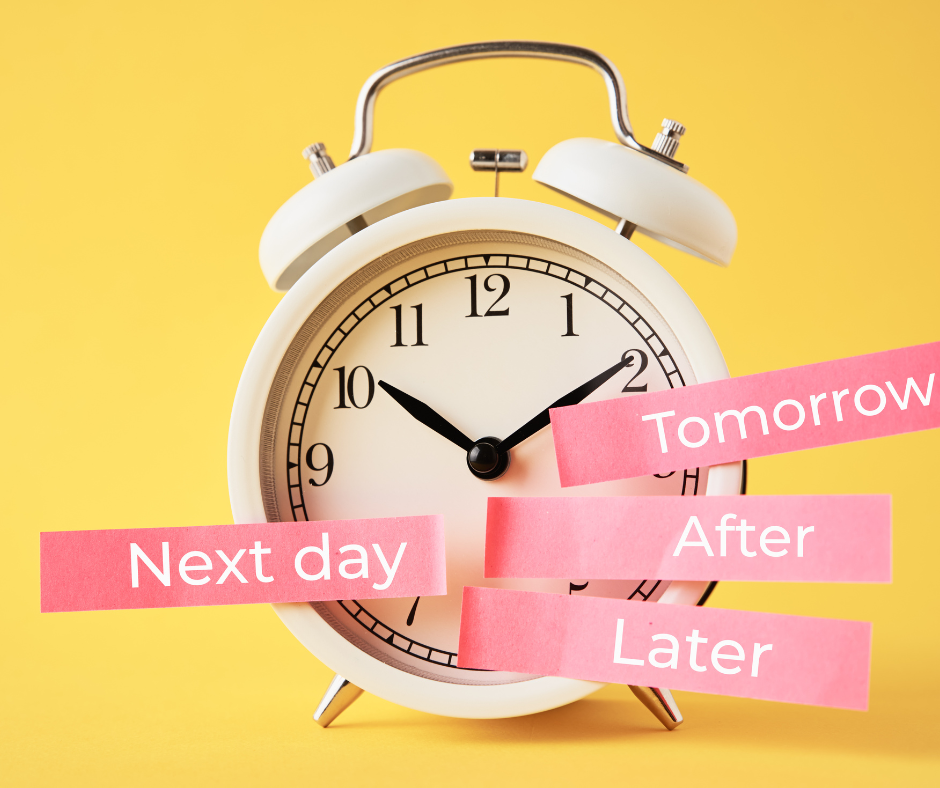
Breaking the Cycle Without Turning Against Yourself
True change in procrastination patterns happens when pressure is replaced with permission and curiosity. This doesn’t mean abandoning responsibility; it means approaching it differently. When you notice avoidance, instead of asking What’s wrong with me?, you might ask What feels hard right now? or What is my system protecting me from? These questions shift the focus from blame to understanding. Over time, this approach reduces resistance and creates space for motivation to re-emerge naturally. Progress may feel slower this way, but it is often more sustainable because it works with your nervous system instead of against it.
Therapist-Guided Strategies to Gently Break the Procrastination Cycle

1. Start With Regulation, Not Productivity
One of the most effective but overlooked shifts in addressing procrastination is beginning with nervous system regulation rather than task demands. When your body is in a state of tension, shutdown, or anticipatory stress, asking yourself to “just get started” often increases resistance rather than reduces it. Regulation creates the internal conditions where motivation can return organically. This might look like intentionally slowing down before approaching a task and noticing what your body is doing rather than what your to-do list demands. When you soften the body, the brain often follows. Regulation is not avoidance — it is preparation.
- Taking several slow breaths that emphasize a longer exhale to signal safety
- Grounding physically by placing your feet on the floor or noticing pressure points in your body
- Lowering stimulation by reducing background noise, screens, or caffeine before beginning
When regulation comes first, productivity stops feeling like a threat and starts feeling possible.

2. Shrink the Task Until It Feels Almost Too Easy
Procrastination often persists because tasks are cognitively and emotionally overestimated. Your nervous system is responding not to the task itself, but to the idea of the task as something overwhelming, endless, or high-stakes. A therapeutic approach involves intentionally breaking tasks down until they no longer trigger a threat response. This can feel counterintuitive for people who believe they should be able to “handle more,” but safety — not capacity — determines action.
- Defining the task as opening the document rather than completing it
- Setting a timer for five minutes with permission to stop when it ends
- Focusing on engagement rather than outcome
When the bar is lowered enough, initiation becomes tolerable, and momentum often follows without force.

3. Replace Self-Criticism With Curious Observation
Many people attempt to overcome procrastination by mentally berating themselves into action, unaware that this strategy often reinforces the very cycle they want to escape. Self-criticism activates the same stress responses that contribute to avoidance, making engagement even harder. A therapeutic alternative is to replace judgment with curiosity, allowing you to observe your patterns without attaching moral meaning to them. This shift can feel subtle but is often transformative over time.
- Noticing when avoidance shows up and what emotions accompany it
- Asking what the task represents emotionally rather than assuming laziness
- Tracking patterns without labeling them as failures
Curiosity reduces defensiveness and opens the door to change without self-punishment.

4. Rebuild Self-Trust Through Gentle Follow-Through
Chronic procrastination often erodes self-trust, making motivation feel unreliable. When you repeatedly promise yourself you’ll do something and then don’t, your system learns not to believe you. Rebuilding this trust requires making smaller, more realistic commitments that you can consistently keep. Over time, reliability — not intensity — restores confidence in your ability to act.
- Committing to short, achievable actions rather than ideal outcomes
- Following through even when motivation is low, without forcing perfection
- Acknowledging effort rather than dismissing it
Self-trust grows when your nervous system learns that action does not lead to punishment or overwhelm.

5. Address the Emotional Meaning Behind the Task
Tasks rarely exist in a vacuum. For many people, procrastination is tied to deeper emotional themes such as fear of failure, fear of being seen, perfectionism, or past experiences of criticism. Therapy often focuses on identifying what a task symbolizes rather than only how to complete it. When emotional meaning is addressed, avoidance often decreases naturally.
- Exploring whether the task feels evaluative, irreversible, or identity-threatening
- Naming fears that arise around competence, judgment, or disappointment
- Separating the task from your worth or value as a person
When the emotional charge decreases, the task becomes more approachable.
6. Allow Rest Without Turning It Into Punishment
Many people caught in procrastination cycles alternate between avoidance and self-denial, believing they don’t deserve rest until they’ve “earned it.” This mindset reinforces burnout and reduces motivation. Therapeutic work often involves normalizing rest as a biological need rather than a reward. When rest is allowed without guilt, energy becomes more available for engagement.
- Scheduling rest intentionally rather than only collapsing into it
- Noticing how your body responds to guilt-free pauses
- Separating rest from moral judgment
Rest that is chosen consciously restores capacity rather than draining it.

7. Consider Professional Support When the Cycle Feels Entrenched
When procrastination is long-standing and tied to shame, identity, or nervous system dysregulation, working with a therapist can be deeply helpful. Therapy provides a space to explore these patterns without judgment while building tools that support regulation, self-trust, and sustainable action. This work is not about becoming more disciplined — it is about becoming more supported.
- Trauma-informed approaches that address threat responses
- Somatic strategies that work with the body, not just the mind
- Compassion-based frameworks that reduce shame and avoidance
Support does not mean you’ve failed; it means you’re responding wisely.
You Have the Will To Make The Change
If procrastination has convinced you that you’re broken, unmotivated, or beyond help, it’s important to pause and question that narrative. Struggling to initiate does not mean you’ve given up on yourself — it often means you’ve been carrying too much for too long without the support or safety needed to move forward. Motivation is not something you need to manufacture through shame or force. It is something that returns when your system feels regulated, respected, and understood. At KMA Therapy, we view procrastination not as a failure of character, but as information — a signal that something in your internal environment needs care. When that care is provided, change becomes possible without self-abandonment.
Book your free 15-minute Discovery Call today!


